Limo Reservation Systems: Find Your Perfect Fit with a Free Trial
Compare limo reservation systems and see which booking, dispatch, and payment features matter most, then use a free trial to find your perfect fit.
On this page
- Why Do Limo Companies Need Advanced Booking Software?
- How Will This Guide Help You Find Your Perfect Fit?
- Why Is a Modern Limo Reservation System Essential for Your Business?
- What Features Must Every Limo Reservation System Offer?
- Advanced Features That Set a Limo Reservation System Apart
- Security and Reliability: Protecting Your Business and Customer Data
- Finding Your Perfect Fit: A Strategic Approach to Choosing Your System
- Bottom line: use free trials to match the software to your business
- Frequently Asked Questions
Quick answer: A limo reservation system is software that handles online booking, dispatch, driver assignment, payments, and customer notifications in one place. The right fit depends on your fleet size, service mix, and budget, so list must-have features first, then use free trials to test real bookings, dispatch, and reporting before you commit.
The limousine industry is changing. Running a limo business on phone calls, spreadsheets, and handwritten notes no longer works when customers expect digital service from first inquiry to final payment. This article explains how a modern limo reservation system can streamline operations, improve the customer experience, and support growth.
It covers the core and advanced features every top limousine reservation software should have, and how to use free trials to find the right fit for your business.
Why Do Limo Companies Need Advanced Booking Software?
The luxury transportation market is increasingly competitive, and businesses that cling to manual processes face real hurdles. These include inefficient scheduling, difficulty managing drivers, limited visibility into fleet operations, and a disconnect from modern customer expectations. Not offering instant online booking or real-time updates can cost you revenue and damage your brand.
Advanced limo software is now a necessity for survival and growth. It streamlines operations, improves service delivery, and helps you attract a broader clientele.
How Will This Guide Help You Find Your Perfect Fit?
This guide helps you navigate the world of limo software. It covers the essential features that separate an effective booking system from the rest, plus advanced capabilities that can give you a competitive edge. It also gives you a framework for evaluating systems, with a focus on getting the most from free trials.
By the end, you will have a clear roadmap for choosing the limousine reservation software that fits your business objectives and operations.
Why Is a Modern Limo Reservation System Essential for Your Business?
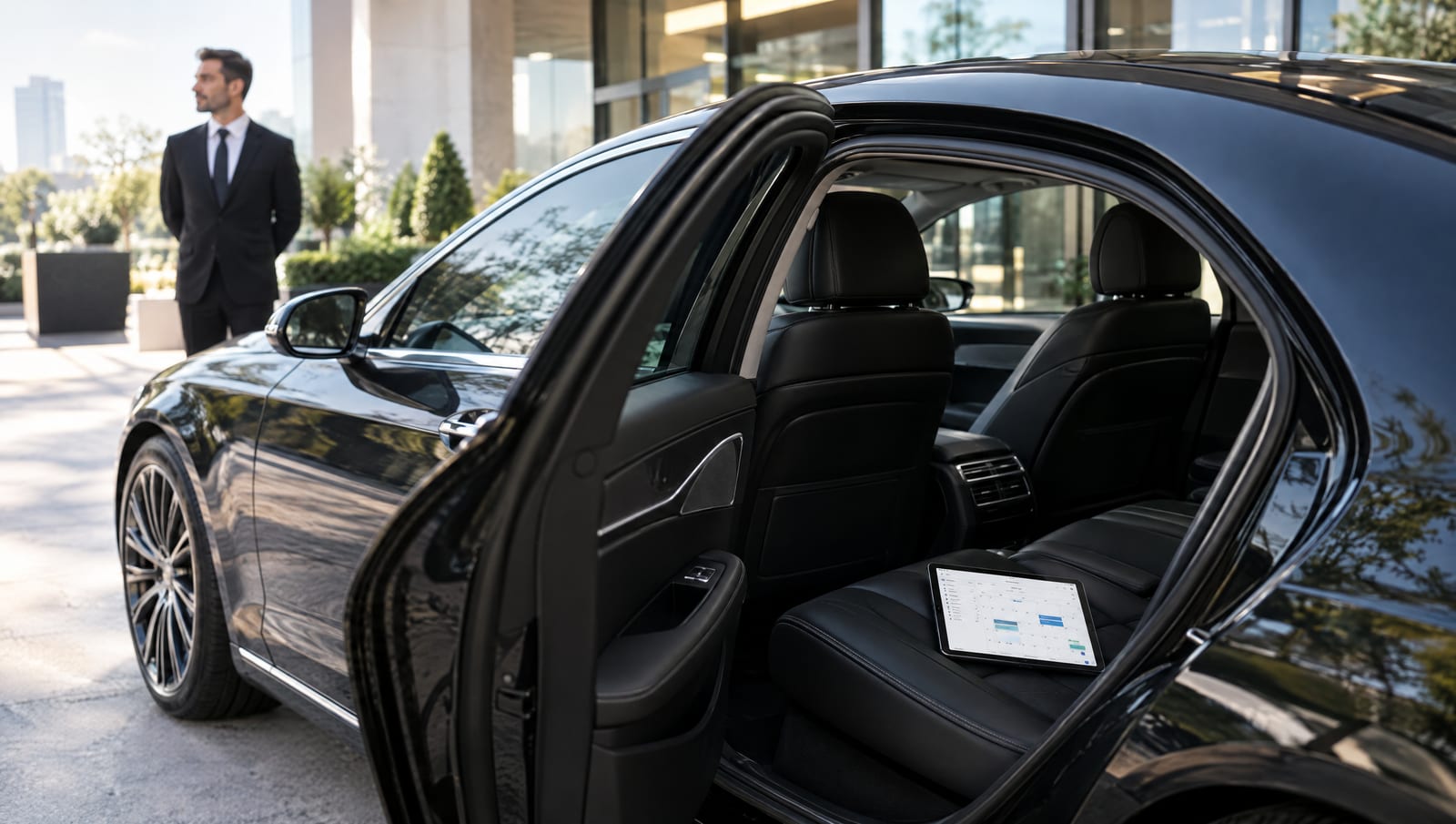
 Visualizing the transformation: A modern limo reservation system replaces manual chaos with streamlined, digital efficiency.
A sophisticated limo software solution is pivotal for any limousine business aiming for sustained success. The benefits go well beyond booking management and touch every part of operations and customer interaction. This digital shift helps you overcome longstanding inefficiencies and find new ways to grow.
Streamlining Operations and Improving Efficiency
Manual scheduling and dispatch are time-consuming and prone to errors. A modern booking system automates these tasks and centralizes all information in one accessible platform, which reduces double bookings, missed appointments, and logistical headaches.
Dispatch software with automated assignment and route optimization keeps your fleet used effectively, minimizing idle time and maximizing revenue per vehicle. Integrated GPS tracking adds real-time visibility, so dispatchers can monitor driver locations, adjust schedules on the fly, and give accurate ETAs.
Improving the Customer Experience from Inquiry to Drop-off
A frictionless customer experience is paramount. A user-friendly online booking interface on your website or a dedicated mobile app lets clients book 24/7, view available vehicles, and receive instant confirmations, a clear advantage over phone-based systems.
Automated SMS and email notifications for booking confirmations, reminders, and driver details add transparency and customer confidence. That smooth journey from the first booking to the final drop-off fosters loyalty and repeat business.
Gaining a Competitive Edge in the Luxury Transportation Industry
Companies that adopt advanced technology stand out. Sophisticated limousine reservation software can offer capabilities competitors may lack, such as integrated payments, personalized customer profiles, and detailed reporting. It also improves internal efficiency and projects a professional, modern image to potential clients.
It lets you offer premium service, such as real-time flight tracking for airport pickups, which suits corporate clients and VIPs and strengthens your market position.
Overcoming Manual Challenges: From Scheduling to Invoicing
Manual methods create bottlenecks at every stage. Scheduling is a constant juggling act, dispatch requires direct communication for every change, and invoicing is tedious and error-prone. Limo software automates these functions. It handles complex scheduling for multiple vehicles and drivers, manages reservations with flexibility for changes and cancellations, and generates professional invoices automatically.
That frees your team to focus on business development and exceptional customer service instead of administrative tasks. Fewer manual errors also mean fewer disputes and a more professional operation.
What Features Must Every Limo Reservation System Offer?
Choosing the right limo software starts with the foundational features that are non-negotiable for efficient operation. These core functions form the backbone of any successful booking system. For a deeper look at conversion, see what features a limo booking system should include to maximize conversions.
Intuitive Online Booking and Customer Portal
The online booking engine is the primary gateway to your services. It must be intuitive, letting customers select services, vehicle types, dates, and times and enter pickup and drop-off details. A well-designed customer portal gives clients one place to view past and upcoming reservations, manage their profile, and make payments.
This self-service capability empowers customers and reduces the workload on your administrative staff. The booking interface should integrate easily into your website and reflect your brand.
Dispatching Software and Fleet Management
Dispatching software is the heart of your operational efficiency. It needs to give dispatchers a clear, real-time overview of all bookings, vehicle availability, and driver statuses. Automated dispatching, route optimization, and the ability to override assignments manually are critical.
Strong fleet management tools matter too. These include tracking vehicle maintenance schedules, managing insurance and registration renewals, and monitoring vehicle performance through GPS tracking. Effective fleet management keeps your vehicles road-ready and well used.
Payment and Invoicing Solutions
Secure, convenient payment processing is vital for customer satisfaction and financial management. Top limo software integrates with various payment gateways and supports credit cards, digital wallets, and other preferred payment methods.
Automated invoicing is equally important, generating professional, itemized bills from reservation details and sending them to clients immediately. That streamlines accounts receivable, improves cash flow, and cuts the administrative work of manual invoicing and payment tracking.
Dedicated Mobile Apps for Drivers and Passengers
Mobile technology is indispensable. A dedicated driver app is crucial for field operations. It should give drivers their daily schedules, detailed trip information, GPS navigation, and a direct channel to dispatch. That improves driver efficiency, shortens response times, and sharpens service accuracy.
A passenger app, particularly for larger operations, can offer customers a branded experience: booking rides, tracking their assigned vehicle in real time, and communicating with the driver. Support for both Apple and Android platforms ensures broad accessibility.
Automated Communication and Notification System
Effective communication is the bedrock of excellent service. An automated notification system keeps your team and customers updated on time. It covers booking confirmations, reservation reminders, dispatch alerts, driver assignment notifications, and post-ride feedback requests.
Delivered by SMS or email, these messages minimize missed appointments, reduce customer inquiries, and keep everyone informed. They also cut the reliance on manual phone calls for routine updates, freeing your staff.
Comprehensive Reservation Management
At its core, limousine reservation software must excel at managing reservations. That means a centralized dashboard where all bookings are visible, sortable, and filterable by date, time, customer, or vehicle type. The system should make it easy to create, modify, and cancel reservations, with updates reflected automatically across the platform.
For a business with a large fleet or diverse services, advanced reservation management can include capacity management, availability calendars, and group booking, so no opportunity is missed.
Advanced Features That Set a Limo Reservation System Apart
Once the core functions are in place, advanced features can turn good limo software into a strong tool for growth and market differentiation. These capabilities use technology to provide deeper insight and more sophisticated operational control.
AI-Powered Dispatch and Demand Prediction
Artificial intelligence is reshaping dispatch software. AI can analyze historical data, traffic patterns, and external events such as conferences or sporting events to predict demand more accurately. That allows proactive fleet positioning and staffing adjustments, so you are ready for peak periods and avoid downtime during lulls.
AI can also optimize routing in real time, adapting to changing conditions for the most efficient and timely service, which improves customer satisfaction and helps manage operating costs.
Data Analytics and Reporting for Business Insights
Your operating data is one of your most valuable assets. Top-tier limo software provides comprehensive analytics and reporting. Reports can reveal booking trends, peak hours, popular routes, customer demographics, driver performance, and revenue by service type or vehicle.
These metrics support data-driven decisions about pricing, marketing campaigns, fleet expansion, and operational improvements, which leads to better planning and higher profitability.
Integration Ecosystem
Modern businesses rarely operate in a vacuum, and a limo software platform that integrates with other essential tools is worth more. Look for APIs or pre-built integrations with accounting software (like QuickBooks), CRM systems, marketing automation platforms, and even third-party booking aggregators.
This connectivity eliminates data silos, reduces manual data entry, and keeps information flowing across your business, from sales and marketing to finance and operations.
White Label Limo Booking Software for Brand Consistency
For businesses building a strong brand identity, white-labeling is invaluable. White label limo booking software lets you rebrand the booking engine and customer portal with your company's logo, colors, and messaging. That gives clients a consistent, professional experience at every touchpoint and reinforces your premium image. See our overview of white label limo booking software for more.
Scalability and Future-Proofing for Growing Transportation Businesses
As your business grows, your limo software needs to grow with it. A scalable system handles more bookings, a larger fleet, and more users without performance degradation.
Future-proofing means choosing a provider that updates its software regularly, adopts new technologies such as AI and advanced analytics, and adapts to evolving industry standards and customer expectations. That keeps your investment relevant and supports your long-term goals.
Security and Reliability: Protecting Your Business and Customer Data
With cyber threats and data privacy regulations on the rise, the security and reliability of your limo software are paramount. Protecting sensitive customer information and keeping operations running are critical to maintaining trust and preventing disruption.
Cloud-Based Infrastructure for Accessibility and Redundancy
Modern limo software is predominantly cloud-based. That means accessibility: you can manage your business from anywhere with an internet connection. Cloud infrastructure also tends to provide redundancy and disaster recovery, so your data stays backed up and accessible after hardware failure or a local disaster.
That supports 24/7 access to your booking and dispatch operations, a critical need in transportation.
Data Encryption and Protection
Your limousine reservation software manages sensitive data: customer contact details, payment information, and travel plans. It must be rigorously protected. Reputable providers use strong data encryption in transit and at rest, so data exchanged with their servers or stored in their databases is unreadable to unauthorized parties. That safeguards your business and your clients.
Email Security Protocols
Email plays a central role in customer communication and internal notifications, so secure email protocols are essential. Systems should support or implement industry-standard measures such as DMARC, SPF, and DKIM. These protocols help authenticate outgoing email and prevent spoofing and phishing that could damage your reputation or compromise customer data.
System Uptime and Outage Protection
Reliability is non-negotiable for a 24/7 service industry. Top providers publish high uptime commitments (often 99.9% or higher) backed by redundant servers, load balancing, and proactive monitoring. Understand their service level agreements (SLAs) and their strategies for minimizing downtime.
A system with frequent outages leads to lost bookings, frustrated customers, and serious operational disruption.
Finding Your Perfect Fit: A Strategic Approach to Choosing Your System
Choosing limo software is a big decision that affects efficiency, profitability, and customer satisfaction. A step-by-step approach built around free trials is the most effective way to find a system that meets your needs. LimoFlow, for example, offers a 30-day free trial of the full platform with no credit card required; see whether limo software has a free trial.
Step 1: Assess Your Unique Business Needs and Goals
Before you look at software options, take stock of your business. What are your main pain points: scheduling inefficiencies, poor customer communication, or slow payment processing? What are your growth goals: expanding your fleet, offering new services, or targeting a different clientele?
Answering these questions helps you prioritize the features with the biggest impact. Consider your budget, the size of your fleet, and the volume of bookings you handle.
Step 2: Prioritize Must-Have vs. Nice-to-Have Features
Based on your needs assessment, build a prioritized list of features and sort them into "must-have" and "nice-to-have." If real-time GPS tracking and automated invoicing are critical to your operations, for example, they belong at the top of your must-have list.
Advanced features like AI demand prediction might be nice-to-have for a smaller operation but a must-have for a larger, more sophisticated one. This list guides your evaluation of booking systems and keeps you focused on what matters for your business and customers.
Step 3: Evaluate User-Friendliness and Support Quality
Powerful limo software is ineffective if it's too complex for your team. During your free trial, test the system from the perspective of dispatchers, drivers, and administrators.
Support quality matters just as much. Can you easily reach a knowledgeable person when you have questions or run into issues? Responsive support is crucial during implementation and as you grow, so assess documentation, training resources, and response times. Our 20 questions to ask on a limo software demo covers support and reliability in more depth.
Step 4: Test the Customer Experience and Driver App Functionality
Your software directly affects customer experience and driver efficiency. During the trial, simulate the customer booking process on your website or through the provided demo. Is it intuitive? Does it offer all the necessary options?
Have your drivers use the driver app in real-world scenarios if possible. Is it easy to navigate, receive updates, and communicate? Feedback from the team members who will use the system daily is invaluable at this stage.
Step 5: Analyze Reporting and Scalability Options
Examine the system's reporting capabilities. Can it provide the insights you need to understand your business performance? Test how easily you can generate key reports on bookings, revenue, and driver activity.
Ask about scalability, too. Can the system grow with your business? Does the provider have a clear roadmap for future development and updates so the software stays competitive and relevant? These answers help you make a long-term investment.
Bottom line: use free trials to match the software to your business
In the dynamic transportation industry, advanced limo software is a strategic imperative for any limousine business that wants to thrive. It streamlines complex operations, improves the customer experience, and gives you a competitive edge. Core functions such as intuitive online booking, dispatch software, payments, and dedicated driver apps lay the foundation for efficiency, while advanced features such as AI-driven insights and integrations open paths to growth and differentiation.
The key is choosing the limo booking software that fits your business needs and operations, and free trials are your most useful tool. Assess the interface, test the customer experience, evaluate the driver app, and scrutinize support quality. Investing in the right limousine reservation software pays off in efficiency, profitability, and customer satisfaction. Start exploring your options today to find the right fit.
Frequently Asked Questions
What is a limo reservation system?
A limo reservation system is software that manages the booking lifecycle for a limousine or ground-transportation company. It typically combines online booking, dispatch, driver assignment, card payments, and automated SMS and email confirmations in one platform. This replaces manual phone calls, spreadsheets, and paper run sheets, giving your team a single source of truth for every trip.
How do I use a free trial to evaluate limo software?
Start by listing your must-have features, then run realistic scenarios during the trial: create a booking, dispatch a trip, test the driver app, and generate a report. Involve the dispatchers, drivers, and administrators who will use the system daily, and note how responsive the provider's support is. Booking a live demo alongside the trial helps you see workflows you might otherwise miss, and LimoFlow's free trial covers the full platform for 30 days with no credit card required.
What features should a limo reservation system include?
Core features include an online booking engine, a customer portal, dispatch and fleet management, secure card payments, automated notifications, and reservation management. Advanced options can add data analytics, an integration ecosystem, white-label branding, and flight tracking for airport pickups. Prioritize the capabilities that address your specific pain points, and browse a software directory to see which vendors offer them.
How much does a limo reservation system cost?
Pricing varies by provider, fleet size, and the features you enable, and many vendors offer tiered plans and free trials so you can evaluate value before you pay. For reference, LimoFlow plans start at $69 a month on monthly billing (Enterprise from $349), with a one-time setup fee. Compare options side by side and confirm current pricing directly with each provider.
Is cloud-based limo software secure?
Reputable cloud-based limo software encrypts data in transit and at rest, and uses email authentication standards such as SPF, DKIM, and DMARC to prevent spoofing. Cloud infrastructure also provides redundancy and backups so your booking and dispatch operations stay available. Ask any provider about their uptime commitments and data-protection practices before you commit.
Sign Up For Our Limo Marketing Newsletter
Sign up for SMS updates on strategies and tips to increase bookings.


