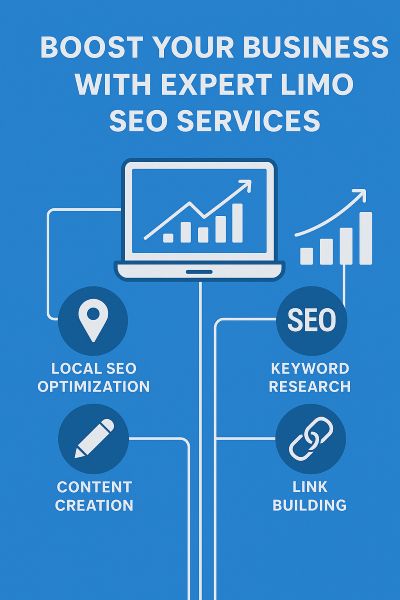
Limousine SEO: Practical Local Strategies to Drive More Bookings
Practical limousine SEO: Google Business Profile, service and city pages, reviews, backlinks and mobile speed to turn local searches into booked rides.

On this page
Quick answer: Limousine SEO means optimizing your website, Google Business Profile, and content so people searching for a ride find you. The highest-impact steps are a complete Google Business Profile, keyword-focused service and city pages, genuine reviews, fast mobile performance, and local backlinks. Done consistently, they grow organic bookings and reduce reliance on paid ads.
Limousine services are competitive, and a beautiful website is not enough: customers also have to find you. Search engine optimization (SEO) helps your limo company show up when someone in your area searches for airport transfers, wedding transportation, or a night-out ride.
Why does limousine SEO matter for booking growth?
Most limo bookings start with a search. When your site ranks well for local, intent-driven queries, you capture demand at the moment a customer is ready to book, without paying for every click. A steady SEO program can:
- Drive more organic traffic from your service area
- Generate qualified leads that are already looking to book
- Build brand trust through reviews and consistent listings
- Lower your long-term reliance on paid ads
What are the core limousine SEO strategies?
How do you optimize your Google Business Profile?
Claiming and completing your Google Business Profile is usually the highest-impact first step for local visibility. Keep your Name, Address, and Phone (NAP) consistent everywhere, add photos of your fleet, list your services, and respond to reviews. A complete profile helps you appear in Google Maps and the local pack. For more on local search, see our guide to local limousine SEO strategies.
How should you structure service and city pages?
Create dedicated pages for each core service (airport transfers, weddings, corporate travel, and black car service) and for each city or region you cover. Work natural keywords into titles, headings, meta descriptions, image alt text, and URLs so search engines understand what you offer and where.
How do reviews and local backlinks help rankings?
Earn links and mentions from wedding venues, event planners, travel blogs, and local business partners. Combine those backlinks with a steady stream of genuine customer reviews to build the trust signals search engines reward. Both compound over time as your reputation grows.
Why does mobile speed matter for limo SEO?
A large share of limo searches happen on phones, and Google prioritizes fast, mobile-friendly sites. Use responsive design, quick load times, and large, easy-to-tap booking buttons. Pairing a fast site with a mobile-friendly online booking and dispatch flow helps turn those searches into completed reservations.
How do you turn search traffic into bookings?
Ranking is only half the job: visitors still have to convert. LimoFlow provides online booking, dispatch, automated SMS and email confirmations, card payments, and reporting, plus a CRM with booking-level marketing attribution so you can see which channels produce bookings. Organic visitors can reserve a ride in a few taps, and customers can book directly on your own website. You can book a demo to see how the booking flow fits your website.
How do you measure and improve limousine SEO?
SEO is ongoing rather than one-and-done. Review performance monthly, double down on the pages and keywords that convert, and refresh older content as your services change. As you compare tools, our limo software directory and side-by-side comparisons can help you keep your booking and dispatch workflow aligned with demand. Useful tracking tools include Google Analytics, Google Search Console, and a rank tracker such as Ahrefs or Semrush.
Frequently Asked Questions
How long does limousine SEO take to show results?
SEO is a long-term strategy rather than an instant fix. Most limo operators start to see movement in local rankings and organic traffic within a few months of consistent work. Content, reviews, and backlinks tend to compound, so results usually build over time.
What is the best first step for limo SEO?
Claiming and fully optimizing your Google Business Profile is typically the highest-impact starting point for local visibility. Keep your Name, Address, and Phone consistent everywhere, add photos and services, and reply to reviews. This helps you appear in Google Maps and local search results.
Do I still need paid ads if I invest in SEO?
No. SEO builds organic visibility that can reduce your reliance on paid ads over time. Many limo companies run both channels, then shift budget toward whichever converts best as their organic rankings improve.
How does booking software help SEO traffic convert?
A fast, mobile-friendly booking experience reduces friction once visitors reach your site, which supports both conversions and search performance. LimoFlow offers online booking, dispatch, automated confirmations, and reporting to help you turn organic traffic into completed reservations.
Sign Up For Our Limo Marketing Newsletter
Sign up for SMS updates on strategies and tips to increase bookings.